
What Your Body Knew Before the Diagnosis — and How to Begin Listening Now
- Jasper Van Remundt
- 1 day ago
- 5 min read

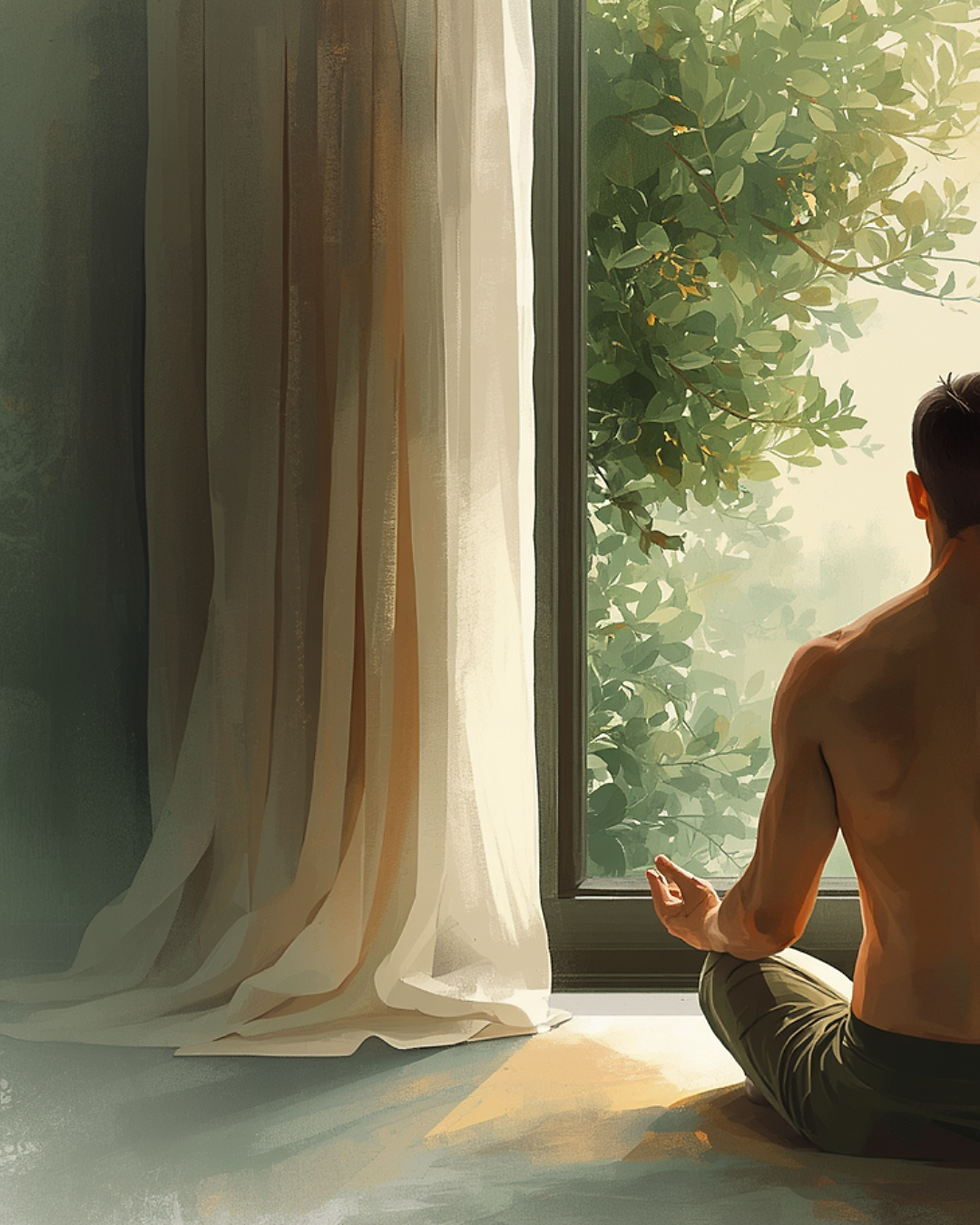
In the months before my diagnosis, I knew. Not the way you know a fact. The way the body knows before the mind allows itself to.
There was the fatigue I was attributing to a busy season. The night sweats I told myself were from a warm room. The lump beneath my collarbone I noticed once, then chose not to notice again. None of these things, on their own, told the whole story. But strung together, they were a quiet sentence the body had been speaking for a long time. I just didn’t know how to read it.
Most people I work with describe a similar moment. Sometime after the diagnosis lands, a memory surfaces. A conversation they didn’t quite let in. A fatigue they pushed through. A symptom they explained away. And then a question begins to grow, slowly: “What did my body know that I missed?”
This is one of the most tender places in the whole healing journey. It can shade quickly into guilt, into self-blame, into the loop of “I should have listened sooner.” But the body’s whisper before the diagnosis is not an accusation. It is the beginning of a different kind of relationship — one that, if we’re willing, becomes a practice for the rest of our lives.
The body whispers before it screams
Ayurveda teaches a beautifully simple idea: the body always communicates. First as a whisper, then as a normal signal, then as discomfort, and finally as a scream. By the time most of us are diagnosed with anything serious, we are not at the beginning of the conversation. We are somewhere further along the way.
That doesn’t mean we caused our illness. Bodies are immensely complex. Genetics, environment, exposures, lineage, randomness — all weave together. There is no neat causal line. But there is, almost always, a conversation we were having with our body that we didn’t realise was a conversation.
Tightness in the throat that arrived every Sunday evening. A digestion that had been off for a year. Exhaustion that no amount of sleep solved. A subtle pulling away from our own life. These were not failures. They were sentences. The body was speaking. We just hadn’t learned the language.
✶ ————— ✶ The body whispers before it screams. Imbalance is a message, not an enemy. ✶ ————— ✶ |
Why we stop listening
Most of us were never taught body literacy. We were taught performance. We were taught to push through, to be reliable, to ignore minor signals in service of the day. We were taught that the body is something we manage — fuel it, fix it, force it forward.
So when our body began to whisper, we treated the whispers as obstacles. “Not now, body. We have a deadline.” “Not now, body. The kids need me.” “Not now, body. I’ll rest on the weekend.”
The whispers don’t go away. They just get louder.
This is not anyone’s fault. It is the culture we live inside. A culture that rewards numbness and calls it productivity. A culture that confuses chronic exhaustion with commitment. A culture that does not have a word for the ache that arrives when a person has been not-themselves for too long.
After a diagnosis, that culture can no longer hold. The body has finally insisted on being heard. And here, in this strange and terrifying clearing, a doorway opens.
The doorway is not backwards
Here is the part where it would be easy to slip into regret. To replay every moment we missed. To wish we had paid attention earlier. I understand that pull. I have been there myself, more than once.
But the gift of listening is not retroactive. It is not about correcting what we missed. The body did not whisper to us in the past so we could feel guilty in the present. It whispered so it could begin teaching us a way of being. The whispering is still happening, right now, today.
What did your body know? It knew it needed rest. It knew the relationship was draining you. It knew the work was misaligned. It knew you had stopped going outside. It knew you hadn’t cried in a long time. It knew the silence inside you was getting loud.
It still knows.
This is the doorway. Not back, but inward.
Listening as a daily practice
Listening to the body is not a dramatic act. It is a small, consistent return. A way of checking in that becomes as natural as a breath.
It might look like this: three times a day, you pause. You take one breath that arrives all the way into your belly. You ask, gently, “How am I, really?” You don’t need an answer in words. The body might respond with a wave of tiredness, a softening of the jaw, an unexpected tear, a sigh, a sense of “I want to lie down for ten minutes.” All of this is information. All of this is the conversation.
You begin to notice the difference between hunger and stress. Between tiredness and depletion. Between sadness and grief. Between excitement and anxiety. The body has different signatures for all of these — and the more you listen, the clearer they become.
You start to honour the small messages, so they don’t have to become big ones. You go to bed an hour earlier. You step outside even when you didn’t think you had time. You let yourself cry on a Tuesday afternoon, instead of holding it for the weekend that never arrives.
This is not a wellness performance. This is the slow, lifelong work of becoming a person whose body is no longer a stranger.
A simple beginning: three times a day, pause. One full breath into the belly. One soft question: “How am I, really?” No need for words. Let the body answer in its own way. |
The body is not the enemy
It is easy, after a diagnosis, to feel betrayed by the body. To experience it as the place where everything went wrong. This is understandable. It is also, with time, an invitation.
The body is not the enemy. The body is the messenger. It has always been on your side, even when its messages were uncomfortable. Especially then.
The work of healing — and I mean real healing, the kind that lasts beyond a treatment plan — is the slow rebuilding of trust between you and your body. Not the relationship you had before. Something newer, more honest. The kind of relationship where you can sit quietly together and notice what is true.
You are not the patient who failed to listen. You are a human who is being invited, perhaps for the first time in your life, to learn the language your body has been speaking all along.
A gentle closing
If you are reading this in the early weeks after a diagnosis, please take this in: nothing about your illness is a verdict on your awareness. The body is not a court. It is a conversation. And it is still happening.
Today, you can take one breath that arrives fully. You can ask one quiet question: “What do I need right now, really?” You can listen for the whisper without bracing for the scream.
The body has been waiting for you to come closer.
It is not too late. It never has been.
No noise. Just thoughtful emails when it matters.


Comments