
What Cancer Asked Me to Put Down
- Jasper Van Remundt
- Mar 30
- 7 min read


There is a moment — if you have been through cancer — when the weight of everything you are carrying becomes impossible to ignore.
Not the physical weight, though that is real too. I mean the other kind. The stories you repeat about what your body did to you. The protocols you added, and the guilt when you did not follow them. The identity you built around being a fighter, a warrior, a survivor — as though those words were armour rather than just words. The worry about the future dressed up as planning. The old wounds you never looked at directly but carried forward into every scan, every conversation with your oncologist, every sleepless 3am.
I know this weight intimately. Not because I read about it. Because I lived it — three separate times, across three diagnoses of Hodgkin lymphoma, before I finally understood what cancer was actually asking of me.
It was not asking me to do more. It was asking me to put something down.
The Man Who Built the Wrong Life
I came across a teaching recently by Joe Hudson — a coach who works on what he calls the art of accomplishment — in which he tells the story of a man named Eric. Eric did everything right. He set goals, built habits, became disciplined. He built a life that looked, from the outside, like the one he had always wanted.
And then one day, he sat in the middle of it and felt nothing.
"Without discovering yourself, you might build a world that isn't actually for you." — Joe Hudson
I used to think this story was about ambition. I now think it is about illness, too.
When cancer arrived in my life the first time, I responded the way I imagine most people do: I tried to improve myself into healing. I read everything. I optimised my nutrition. I built a practice. I added yoga, Ayurveda, breathwork. Each addition felt like progress. Each new protocol felt like agency — and I needed agency, because without it, I was just a patient, and being a patient felt like disappearing.
But somewhere in the accumulation — and this is what I only understood much later — I was doing what Eric did. I was building a world of healing that was not actually mine. I was performing recovery rather than living it. The practices were real. The learning was real. But underneath it all, something that needed to be seen had not been seen. Something that needed to be released had not been released.
The Acorn Does Not Improve Itself
Joe Hudson uses a metaphor that I have not been able to stop thinking about. He points to an acorn and notes that it grows into a magnificent oak tree, and it never once pauses to think: I need to be better. I need to improve.
The acorn's work is not addition. It is unfolding. And the only thing standing between the acorn and the oak is whatever is blocking the unfolding.
This changes everything about how we approach healing from cancer.
What if the real work is not to add more practices to the pile — though practices matter, and I would not be here without them — but to identify what is blocking the unfolding? What inherited belief about your own unworthiness is still running? What old story about your body as enemy rather than companion? What grief, carried so long it has become invisible?
Sadhguru puts it with characteristic precision: whatever you gather should only enhance inner wellbeing, not entangle you. The question is not how much have I accumulated, but does what I carry serve the quality of my inner life, or does it weigh me down?
"Whatever you gather should only enhance Inner Wellbeing, not entangle you." — Sadhguru
I had to sit with this for a long time. Because some of what I was carrying was useful. And some of it — the fear dressed as vigilance, the self-criticism dressed as standards, the grief I called wisdom without ever actually feeling it — was simply excess baggage.
The Third Diagnosis
When Hodgkin lymphoma returned for the third time, something in me became very quiet.
Not defeated. Quiet. There is a difference.
I remember sitting in the consultation room, and instead of the familiar rush to plan and do and optimise, I felt a strange stillness. And in that stillness, a question arrived — one I had never quite let myself ask before: What am I still carrying that I was never meant to carry?
I had been carrying fear of my own body since the first diagnosis. I had been carrying the subconscious belief that I had to earn my recovery — that if I just did enough, was good enough, tried hard enough, the cancer would not come back. And it kept coming back. Not because I had failed to try, but because the trying itself was built on a premise that was not true.
Aaron Abke, whose work on the subconscious mind I have sat with many times, names this directly:
"You don't manifest what you want. You manifest what you believe you're worthy of receiving." — Aaron Abke
Beneath all my conscious intention — the practices, the protocols, the carefully designed routines — there was a subconscious code running that said: your body cannot be trusted. You are fragile. Healing is something that happens to other people.
That code was never mine. It arrived through fear, through the shock of a first diagnosis in my twenties, through a medical system that is built, for very good reasons, on vigilance and risk. I absorbed it. I built an identity around it. And it took three rounds of Hodgkin lymphoma before I was ready to set it down.
Letting Go Is Not a Single Act
I want to be careful here, because this territory is often misused. The idea that healing is about letting go can be weaponised into a kind of toxic positivity — as though your cancer returned because you were not positive enough, or did not release enough, or held too much resentment. That is not what I am saying. That framing is dangerous and it is not mine.
What I am saying is more specific, and it comes from the lived experience of three diagnoses and many years of working alongside people in the middle of their own.
Letting go after a cancer diagnosis is not about positive thinking. It is about honest seeing. It is about locating — with compassion rather than judgment — the places where old hurt is painting your present moment in the colours of the past.
"Old hurt makes you see reality through the lens of the past. Letting go is when you allow yourself to witness reality without projecting anything onto it." — Yung Pueblo
And Yung Pueblo is right about something else: this is not a one-time act. It is a practice, repeated. The mind needs to learn, over and over, through small and consistent experience, that it is safe to let go. One release does not complete the work. The work is the practice of releasing — gently, repeatedly, without self-punishment when the old weight returns.
A Practice: Five Steps Toward Radical Subtraction
This is a body-based practice I use with my coaching clients, and one I return to myself whenever the accumulation starts to feel heavier than it should. I call it Radical Subtraction. It takes about fifteen minutes and requires nothing but a quiet space and a willingness to listen.
Step 1 — Settle the body.
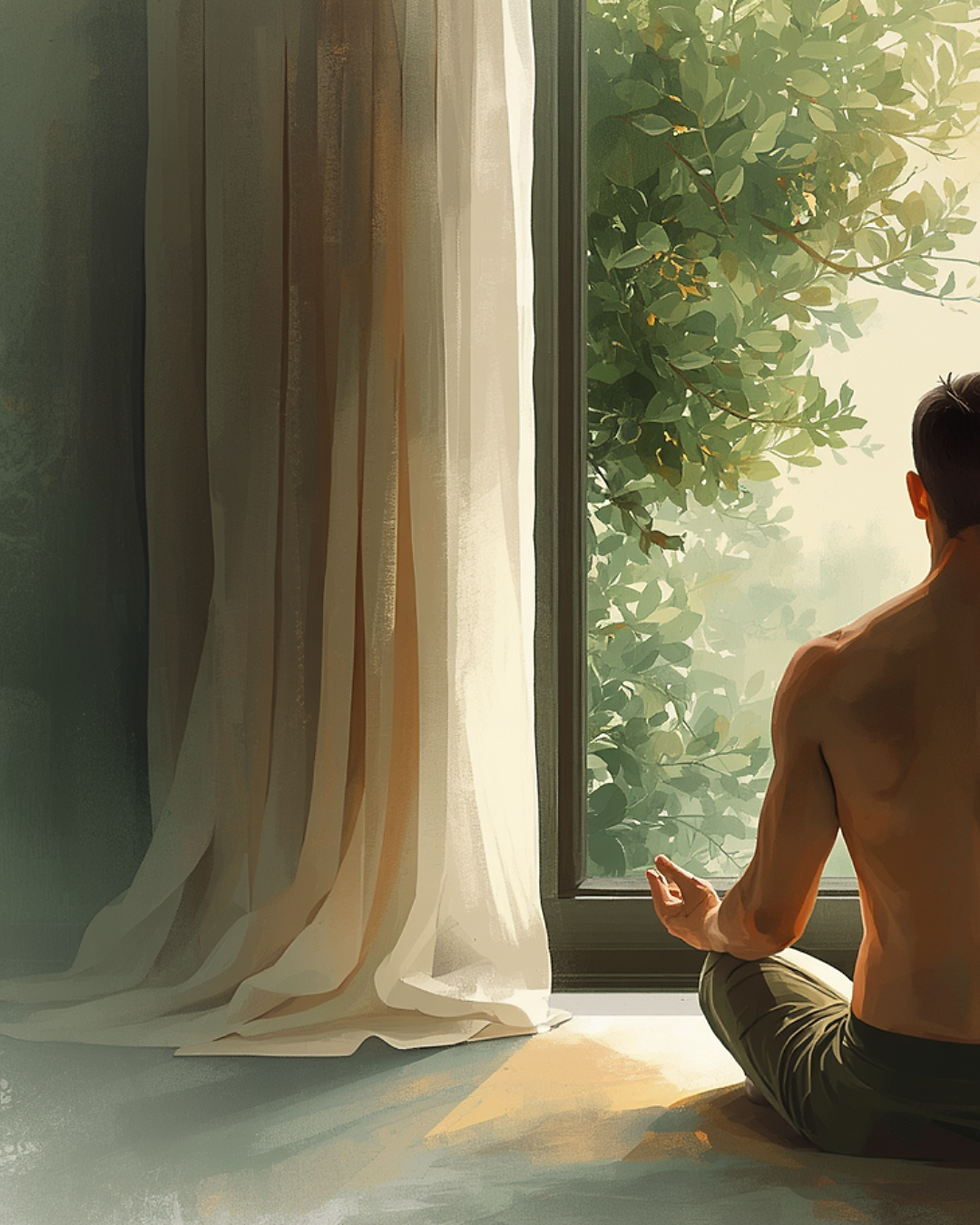
Sit or lie comfortably. Take three slow breaths — longer exhale than inhale. Let the nervous system register: this is a safe moment.
Step 2 — Take inventory.
Without judgment, ask: what am I carrying right now? Not what should I carry, or what should I have let go of. Just: what is actually present? Fear about the next scan. Guilt about a conversation. Grief that never fully landed. Old stories about what your body is, or is not, capable of. Let the list come without editing it.
Step 3 — Ask the key question.
For each item on your list: is this mine to carry? Was it given to you by fear, or by someone else's story, or by a moment that has long passed? Or is it genuinely yours — a feeling that belongs to this moment, a truth that requires attention?
Step 4 — Locate it in the body.
For anything that is not yours to carry, notice where it lives physically. The chest. The throat. The belly. Place a hand there. Breathe into it. You do not need to fix it or understand it fully. You only need to acknowledge it and breathe.
Step 5 — Choose, consciously.
On the exhale, make the choice — not the demand, but the gentle, conscious choice — to set this down. Not forever, necessarily. Just for now. Yung Pueblo writes that the mind needs to learn it is safe to let go. This step is that teaching, offered to yourself, one breath at a time.
What Becomes Possible
I do not want to promise you a particular outcome from this work. That would be exactly the kind of excess I am trying to describe.
What I can tell you is what I have witnessed — in my own body across three diagnoses, and in the clients I have the privilege of walking alongside. When the excess is put down, something settles. Not the false calm of suppression, but the genuine ease of a nervous system that is no longer hauling a weight it was not designed to carry. Decisions become clearer. The body begins to receive care with more openness. Sleep deepens. Fear, when it arises, is recognised for what it is — a visitor, not a resident.
And something else happens, which is harder to name. You begin to sense the person you actually are — the one who was there before the diagnosis, beneath the protocols, prior to the accumulation. The acorn, glimpsing the oak.
Today's question, from the wisdom teachers I sit with each morning, is this: What are you still carrying that was never yours to carry — and what becomes possible the moment you set it down?
I think you already know. I think the body knows, even if the mind is not quite ready to believe it.


Comments