
The Grief Your Body Is Carrying — And What Happens When You Finally Let It Move
- Jasper Van Remundt
- Mar 26
- 5 min read


Something Has Been Living in Your Body
You said you were tired.
You said it was the treatment, the sleepless nights, the relentlessness of appointments and decisions and trying to hold everything together.
You might even have said: "I think I'm anxious."
But what if what you're actually carrying is grief?
Not grief in the theatrical sense — not weeping at a graveside. But the quieter kind. A heaviness behind the sternum. A jaw that won't fully unclench. A fog that settles over your thoughts on the days when everything should feel fine.
Emotional healing after cancer diagnosis is not, I have come to believe, primarily about staying positive. It is about learning to recognise — and finally meet — the grief you have been carrying in your body all along.
Why We Don't Recognise It as Grief
When most people hear the word grief, they think of death — of losing someone. But cancer asks you to grieve a great many things that are still very much alive.
You grieve the body you had before. The future you had planned. The version of yourself who didn't know what it felt like to sit in an oncology waiting room. The ease of moving through a day without wondering what your bloodwork will say.
Emotional health coach Heidi Dellaire puts it plainly:
"Often, what we're carrying isn't anxiety or burnout. It's grief that never had space to move."
The body doesn't distinguish between legitimate grief and grief that has "no real reason" to be there. It simply holds what wasn't given space to move through. And over time, what wasn't expressed becomes a kind of chronic static — foggy thinking, a tension in the gut, an edge to everything.
This is not weakness. This is not something wrong with you. This is the body doing its job: keeping the record of everything you lived through.
Three Diagnoses, Three Rounds of Grief I Didn't Name
I was diagnosed with Hodgkin lymphoma three times.
The first time, I was young enough to believe that fighting was the only option — not just medically, but emotionally. Strength meant not falling apart. Moving forward meant not looking back.
What I didn't understand then was that all the grief I wasn't allowing myself to feel didn't dissolve. It settled. In my shoulders. In my sleep. In the particular way my nervous system seemed permanently calibrated for alarm.
The yoga mat became the first place I encountered it honestly. Not because yoga made me cry — though sometimes it did — but because it slowed me down enough to notice. To feel, beneath the determination and the discipline, something tender and exhausted that had never been acknowledged.
I have since come to understand what philosopher Gary Zukav describes: you cannot simultaneously repress an emotion and heal it. The path through is not around.
The Resistance Is What Hurts
Joe Hudson, whose work on emotional transformation I return to often, offers a teaching that stopped me in my tracks the first time I encountered it:
"It's not actually the emotion that hurts — it's the resistance that is the most painful."
Think about that for a moment.
Not the grief itself. Not the fear, the sadness, the anger that rises when your body feels out of your control. But the holding back. The clenching. The part of you that says: "Not now. I can't fall apart now. There's too much to manage."
That resistance — maintained over days, weeks, months — is what exhausts you. What makes treatment feel heavier than it needs to be. What keeps the nervous system locked in a state of low-grade emergency long after the immediate crisis has passed.
Emotional healing after cancer diagnosis, then, is not about learning to feel better. It is about learning to feel — fully, safely, without the story that your emotions will overwhelm you if you let them.
What the Body Knows That the Mind Hasn't Named Yet
Cancer asks the body an enormous question. And the body — with its somatic wisdom, its cellular memory, its deep-tissue record of every procedure, every fear, every sleepless night — holds more information about your healing than any scan.
Gary Zukav puts it this way: to work with an emotion, you must become intimate with it. You must learn to recognize where it lives in the body, what thoughts it creates, what impulses it generates.
This is not navel-gazing. This is diagnostics of the inner landscape.
And when you can name what lives in your body — when you can say, "This is grief, not anxiety; this is unexpressed fear, not weakness" — something begins to shift. Naming is not passive. As Vishen Lakhiani writes: "When you have language, you have power. You can name the thing. You can work with it."
This is what emotional healing after cancer diagnosis can look like. Not drama. Not breakdown. But the quiet, grounded act of finally acknowledging what you have been carrying.
A Simple Practice: The Body Scan of Grief
You don't need to be spiritually prepared to do this. You don't need to be in a particular state of mind. Nina Rao, a student of Ram Dass, offers a teaching I return to often: you don't wait until you're ready. You bring whatever you are carrying, and you meet it in the practice.
Try this:
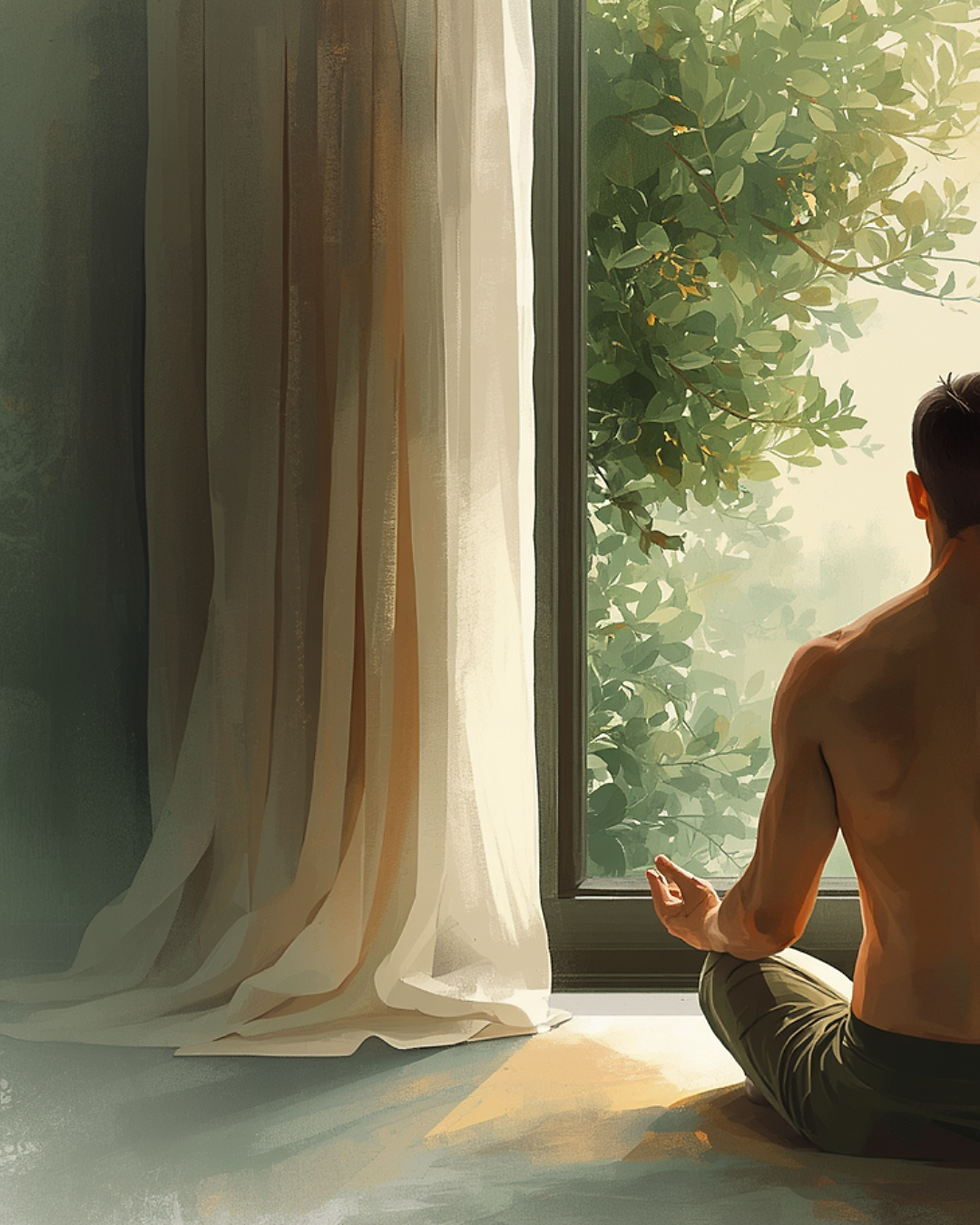
Find a comfortable position — seated or lying down. Close your eyes if that feels safe.
Take three slow, full breaths. Not forced — just allowed.
Ask your body: where are you holding something today? Don't analyse it. Just notice. A heaviness in the chest. A tightness in the throat. A dull ache somewhere you'd prefer to ignore.
Place one hand there. Breathe into it. Not to fix it — just to acknowledge: I know you're there.
Ask, gently: if this had a name, what would it be? Not a diagnosis. A feeling-name. Sadness. Fear. Grief. Exhaustion. Anger.
Stay there for five minutes. Nothing more is required.
You are not solving anything. You are doing something rarer and more important: you are letting it be seen.
Joy Is Waiting on the Other Side
Joe Hudson writes that joy is the matriarch of the emotional family — and she won't come into the house until all her children are welcome.
I have found this to be true.
Emotional healing after cancer diagnosis does not mean the grief disappears. It means the grief is no longer living in hiding — compressed in your tissues, masquerading as fatigue, stealing energy you need for healing.
When the grief is met — gently, slowly, with the kind of breath and practice that creates space rather than demand — something underneath it becomes accessible. A deeper steadiness. A quiet resilience.
You remain whole within the difficulty. Not because the difficulty has gone away. But because you have stopped spending your life force fighting what is already here.
That, I believe, is where healing lives.


Comments