
I Just Got Diagnosed With Cancer — What Now?
- Jasper Van Remundt
- Mar 2
- 5 min read


If you just got diagnosed with cancer, your life probably feels upside down.
Shock.
Fear.
Confusion.
Urgency.
Everything suddenly feels loud.
First, let me tell you something important:
There is time.
The moment you hear the word “cancer,” your nervous system goes into emergency mode. It feels like everything must happen immediately.
Decisions.
Appointments.
Treatment plans.
But pause for a second.
If a tumor developed over months — sometimes years — why does your mind believe you must solve everything in the next 24 hours?
This is not about denying medical urgency.
This is about regulating your nervous system before panic takes over your thinking.
Because panic narrows perception. And clarity requires space.
Step One: Take a Breath Before You Do Anything
When you receive a cancer diagnosis, your body reacts before your mind fully understands.
Heart rate increases.
Breathing becomes shallow.
Sleep becomes difficult.
Thoughts spiral.
This is a biological stress response.
And it makes sense.
But here is something rarely said:
You do not have to make every decision from fear.
Take a moment.
It is okay to panic.
But can you observe the panic?
Who is the one panicking?
There is fear. But there is also awareness of fear.
That awareness is stable.
When you sit with that for even one minute, your system softens.
And when your system softens, you think better.
Cancer Is More Common Than We Talk About
This may sound surprising, but it is grounding:
Cancer is not rare.
Biologically speaking, our bodies are constantly producing abnormal cells. Most are repaired or eliminated by the immune system.
If you were to examine very elderly individuals, 80–90% of them would show some form of cancerous or pre-cancerous growth.
That does not minimize your diagnosis.
It normalizes it.
Cancer is part of life on this planet. As long as cells divide, mutations occur.
Understanding this removes one layer of isolation.
You are not uniquely broken.
You are human.
Fear is natural. But remember: you are not alone in this biological reality.
“What Do I Do After a Cancer Diagnosis?”
If you are searching “what to do after cancer diagnosis”, here are grounded steps:
1. Regulate Before Research
Do not fall into the Google spiral while panicking.
Calm your nervous system first.
Five slow breaths. Longer exhales.
Your brain makes better decisions when your body feels safer.
2. Gather Information Slowly
You will meet doctors. You will hear treatment options.
Take notes. Ask questions. Bring someone you trust.
But do not rush your internal processing.
External urgency does not mean internal chaos is required.
3. Feel Your Emotional Response
How do you actually feel about this diagnosis?
Not how you think you should feel.
Not how others expect you to feel.
How do you feel?
Angry? Numb? Terrified? Relieved to finally have an explanation?
Your emotional response matters.
Your Diagnosis Is Not Your Identity
One of the most destabilizing parts of a new cancer diagnosis is identity shift.
You go from:
Person.
To:
Patient.
Suddenly people speak to you differently.
Look at you differently.
Worry about you differently.
But your diagnosis is not who you are.
Cancer is something happening in your body.
It is not your personality. Not your essence. Not your worth.
You are still you.
Especially in uncertainty.
How Do You Feel About the Treatment Plan?
This is rarely asked.
How do you feel about the proposed treatment?
Not medically — emotionally.
Do you feel confident? Overwhelmed? Pressured? Confused?
It is okay to ask questions.
It is okay to seek second opinions.
It is okay to say, “I need a moment.”
Pleasing everyone else — family, doctors, friends — while ignoring your own intuition creates additional stress.
And stress affects your nervous system.
This is your body.
Your life.
Your journey.
Start listening inward.
The Nervous System and Cancer Diagnosis
When you are newly diagnosed with cancer, your nervous system is under enormous strain.
Chronic stress affects:
Immune function
Inflammation
Hormonal balance
Sleep cycles
Emotional regulation
This does not mean stress caused your cancer.
It means stress influences how you experience it.
If you stay in constant panic, your body remains in fight-or-flight mode.
Healing — alongside medical treatment — requires moments of safety.
That safety can be built intentionally.
Through:
Breathwork
Meditation
Gentle movement
Supportive conversations
Time in nature
They are biological stabilizers.
Observe the Panic — Don’t Become It
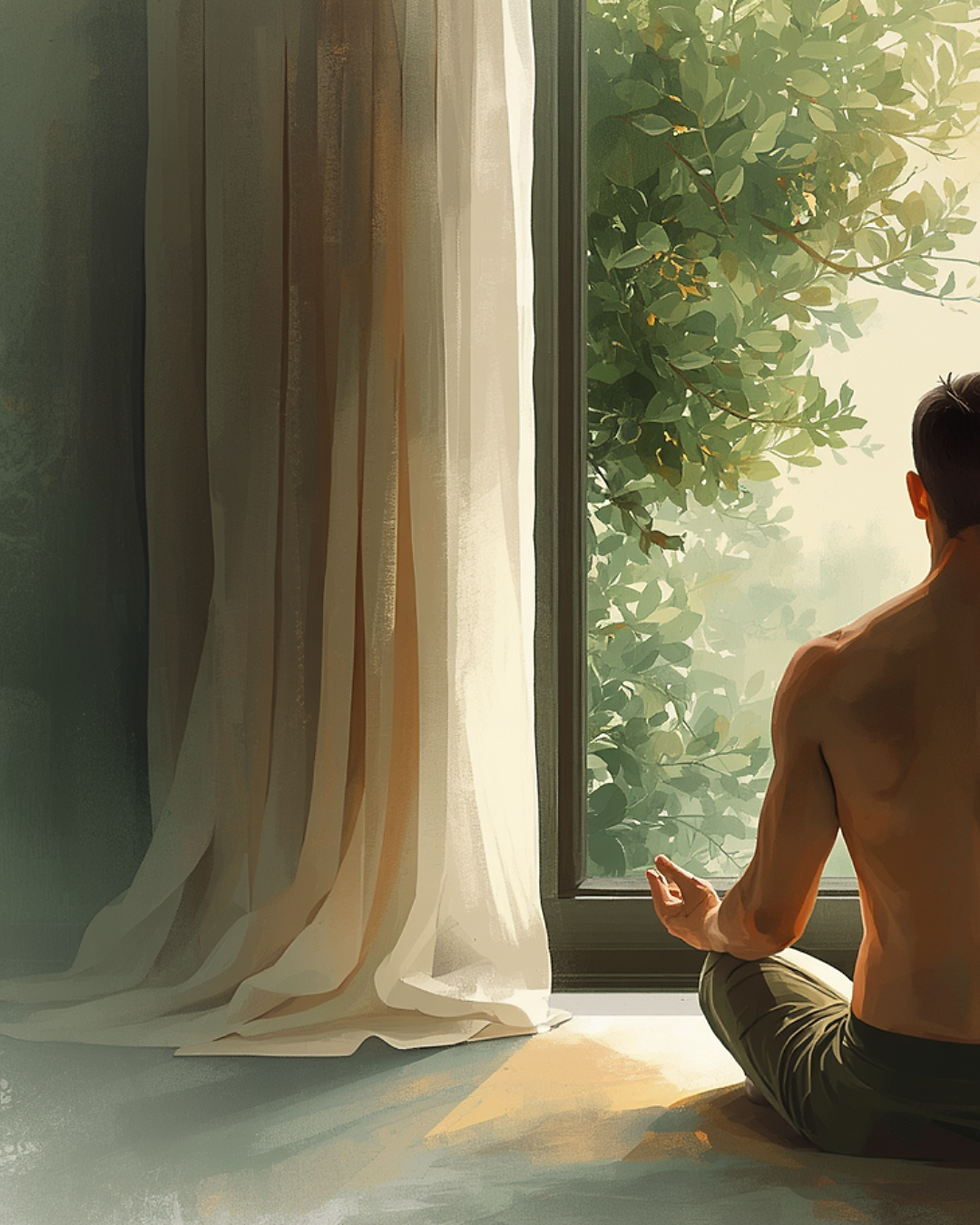
Try this right now.
Close your eyes.
Notice the fear.
Instead of saying, “I am panicking,” say:
“There is panic.”
Feel the difference.
One traps you inside it.The other creates space.
You are not the fear.
You are the one observing it.
And that awareness cannot be diagnosed.
It cannot be removed.
It remains steady.
That is your anchor.
Breaking Down the Overwhelm
When you think:
“I have cancer.”
It feels enormous.
But break it down.
You have a medical condition that requires attention.
You have a treatment plan to consider.
You have emotions to process.
One layer at a time.
Not everything at once.
Overwhelm happens when the mind tries to solve the entire future in one moment.
You do not need to solve the future today.
You need to regulate today.
It Is Okay to Be Afraid
Let’s be honest.
A cancer diagnosis is frightening.
Pretending otherwise is unnecessary.
But fear does not have to dominate every second.
You can experience fear.
And also experience calm.
Both can exist.
When you allow fear instead of fighting it, it moves through you more quickly.
Suppressed fear lingers.
Observed fear transforms.
Ask Yourself Deeper Questions
Beyond treatment logistics, ask:
What has my life felt like lately?
Have I been under chronic stress?
Am I living in alignment with myself?
What needs to change — regardless of outcome?
From curiosity.
A diagnosis can be devastating.
It can also be awakening.
It invites reflection.
It invites slowing down.
It invites reassessment.
Stop Pleasing Everyone Else
When you get diagnosed, people will have opinions.
They will tell you what to do. What to try. What worked for someone they know.
Most of it comes from love.
But your primary responsibility is not to comfort everyone else.
It is to stabilize yourself.
If telling others feels overwhelming, take space.
If answering messages exhausts you, pause.
You are allowed to protect your energy.
What Matters Most Right Now
If you just got diagnosed with cancer, here is what matters most:
Calm your nervous system.
Make decisions from clarity, not panic.
Separate your identity from the diagnosis.
Seek medical guidance — thoughtfully.
Listen inward as much as outward.
There is time.
You are not required to collapse into urgency.
You are allowed to breathe.
Final Words
If you are at the beginning of this journey, everything may feel uncertain.
But here is something stable:
You are still here.
Breathing.
Aware.
Present.
Cancer is serious.
But so is your capacity.
Take one breath.
Observe the panic.
And remember:
You are not the diagnosis.
You are the awareness meeting it.
And from that place — you move forward.


Comments