
Health Was Never About the Absence of Disease
- Jasper Van Remundt
- Apr 8
- 3 min read


There is a phrase most of us absorbed early in life — handed down through clinics, schools, and health campaigns: that health is the absence of disease. No diagnosis, no symptoms, no problem.
I believed that, too. Until cancer came three times, and I was forced to ask a question that changed everything: what if health is something else entirely?
Yesterday was World Health Day. The headlines were filled with statistics, systems, and calls to action. All of it important. None of it the part I want to talk about.
Because the conversation I think we most need to have about health has nothing to do with the absence of something. It has everything to do with the presence of something — something the numbers don't measure.
"Health is not just the absence of disease — it is a sense of wholeness within."
I have met people in the hospital with cancer who were, in some unmistakable way, whole. And I have met people with clean scans who felt fractured, disconnected, distant from themselves. Those two things unsettled my assumptions in a way I still carry.
What is the difference?
I have turned that question over for years.
What I keep coming back to is this: the people who felt whole were somehow in conversation with themselves. Not performing health. Not performing bravery. Just — present. Inside their own life.
The nervous system is one of the most accurate indicators I know of this quality. When it is regulated — calm, grounded, not stuck in a low hum of threat — the body feels like a home you can live in. When it is dysregulated, even a clean scan cannot give you back the feeling of being okay.
During my three diagnoses, I spent a lot of time trying to fix things. Fight. Manage. Optimise. I was busy. I was also largely absent from my own experience. The treatments were doing their work, but I had evacuated the premises.
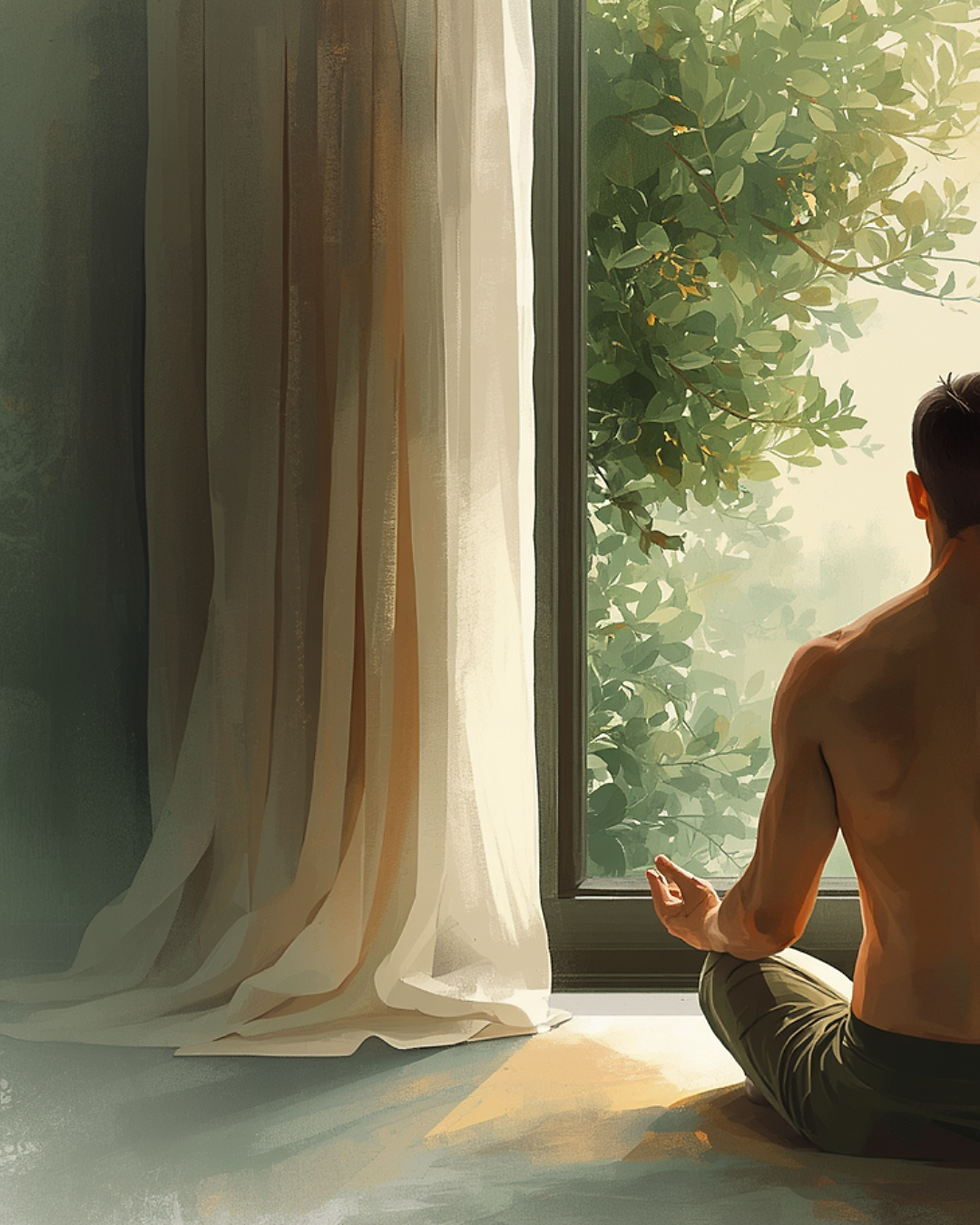
What brought me back was not a therapy or a supplement or a protocol. It was something quieter. Learning to stop. To notice. To let the body be there, and to actually be with it.
This is the piece that rarely makes it into World Health Day conversations. That the single most powerful health intervention available to most people is also the most countercultural one: stillness. Not passive giving-up. Not spiritual bypassing. Real, deliberate, embodied stillness.
A breath that goes all the way in. A morning that starts before the phone does. A walk where you are actually walking, not planning. A moment in the evening where you ask yourself, honestly: how am I, really?
These are not luxury wellness choices. They are biological necessities. The nervous system needs them to do its job. The immune system needs them. The part of you that knows what you actually feel — the part so many of us learn to silence — needs them.
The day after World Health Day, I am not thinking about health systems or policy, though both matter. I am thinking about you. Reading this. What it would mean for you to approach today as an act of health. Not treatment. Not prevention. Just — wholeness.
To notice, once today, the difference between being in your body and being away from it. To feel whether your nervous system is settled or running. To offer it one thing it genuinely needs.
Health is not something they give you in a clinic. It is something you cultivate, breath by breath, practice by practice, choice by choice. Not because you are fighting something. Because you are tending to something.
Something you were always worth tending to.
What would change today, if you decided that being present in your own body counts as a health practice?
I share practices, reflections, and support for moments like this.
No noise. Just thoughtful emails when it matters.


Comments